 In
the 1800s, a sailing ship crashes off the coast of Norway. In the 1900s, a Zepellin explores an icy
canyon in Antarctica. In the far future, a spaceship sets out for an alien artifact. Each excursion
goes horribly wrong. And on every journey, Dr. Silas Coade is the physician, but only Silas seems
to realize that these events keep repeating themselves. And it's up to him to figure out why and
how. And how to stop it all from happening again.
In
the 1800s, a sailing ship crashes off the coast of Norway. In the 1900s, a Zepellin explores an icy
canyon in Antarctica. In the far future, a spaceship sets out for an alien artifact. Each excursion
goes horribly wrong. And on every journey, Dr. Silas Coade is the physician, but only Silas seems
to realize that these events keep repeating themselves. And it's up to him to figure out why and
how. And how to stop it all from happening again.
Nataliya describes the way this novel begins so well that I'm just going to quote her:
This starts more like if “Moby Dick” had a literary baby with “Groundhog Day” while cheating on Jules Verne...Who knew that the astrophysicist author best known for high tech sci-fi could dive deep into such mundane earthly matters as 19th century nautical fiction?
This is a difficult book to review, for I don't wish to spoil it for anyone. As you can glean from the blurb and Nataliya's quote, Dr. Silas Coade is the ship's physician on ill-fated expeditions across time. Through his exchanges with the crew and passengers aboard these ships, a host of clues are presented, but Silas is oblivious to them at first. As they come together, Silas is forced to confront the truth, but his reluctance to do so will doom him and the others to disaster.
That's all I can say about the plot.
I enjoyed each expedition across time as Reynolds varied the details and the unfolding of events. The interaction between the characters rang true to their time period with Ada being a bit of fresh air each time. Figuring out some of the clues wasn't too difficult as the narrative moved from one timeline to the next, but the big reveal caught me by surprise. And once revealed, the story still had enough mileage to stay glued to it.
Overall, an entertaining sci-fi mystery adventure. Would make for a good movie.
4.5 stars
\_/
DED

 Find
the courage to create your best writing life. Whether you're a fledgling writer or a veteran with years of
experience, fearlessness—that elusive blend of self-acceptance, confidence, and curiosity—is
the defining quality of those who find fulfillment and success. Truly fearless authors banish writer's
blocks with ease, receive critiques gracefully, and infuse their passion for the craft into every word
they write. Filled with insightful wisdom and practical advice, Fearless Writing teaches you
how to thrive as a writer, no matter your genre or career path. You'll learn how to:
Find
the courage to create your best writing life. Whether you're a fledgling writer or a veteran with years of
experience, fearlessness—that elusive blend of self-acceptance, confidence, and curiosity—is
the defining quality of those who find fulfillment and success. Truly fearless authors banish writer's
blocks with ease, receive critiques gracefully, and infuse their passion for the craft into every word
they write. Filled with insightful wisdom and practical advice, Fearless Writing teaches you
how to thrive as a writer, no matter your genre or career path. You'll learn how to:
 Breq
is a soldier who used to be a warship. Once a weapon of conquest controlling thousands of minds, now she
only has a single body and serves the emperor she swore to destroy.
Breq
is a soldier who used to be a warship. Once a weapon of conquest controlling thousands of minds, now she
only has a single body and serves the emperor she swore to destroy.
 Humans
expanded into space and found a universe populated with multiple alien species bent on their destruction. Thus
was the Colonial Union formed, to help protect us from a hostile universe. The Colonial Union used the Earth
and its excess population for colonists and soldiers. It was a good arrangement...for the Colonial Union.
Then the Earth said: no more.
Humans
expanded into space and found a universe populated with multiple alien species bent on their destruction. Thus
was the Colonial Union formed, to help protect us from a hostile universe. The Colonial Union used the Earth
and its excess population for colonists and soldiers. It was a good arrangement...for the Colonial Union.
Then the Earth said: no more.
 When
a mysterious alien spacecraft approaches the Earth and demands to speak with the President of the
United States, then destroys a large Pacific island to demonstrate its strength and its seriousness,
you'd expect the President to talk. Problem is, in the late twenty-first century, there is no
President—not even a United States. China rules the Americas, and to most people "US" and
"USSR" are just quaint abbreviations in historical dictionaries. But the aliens prove unreasonable
about accepting substitutes. So one Anglo rice-cultivator from the Heavenly Grain Collective farm
near Biloxi, Mississippi is forced to begin an adventure that will take him from peasant to
President, from Pettyman to Spaceman.
When
a mysterious alien spacecraft approaches the Earth and demands to speak with the President of the
United States, then destroys a large Pacific island to demonstrate its strength and its seriousness,
you'd expect the President to talk. Problem is, in the late twenty-first century, there is no
President—not even a United States. China rules the Americas, and to most people "US" and
"USSR" are just quaint abbreviations in historical dictionaries. But the aliens prove unreasonable
about accepting substitutes. So one Anglo rice-cultivator from the Heavenly Grain Collective farm
near Biloxi, Mississippi is forced to begin an adventure that will take him from peasant to
President, from Pettyman to Spaceman.
 Long
ago, Earth's terraforming program sent ships out to build new homes for humanity among the stars and
made an unexpected discovery: a planet with life. But the scientists were unaware that the alien
ecosystem was more developed than the primitive life forms originally discovered.
Long
ago, Earth's terraforming program sent ships out to build new homes for humanity among the stars and
made an unexpected discovery: a planet with life. But the scientists were unaware that the alien
ecosystem was more developed than the primitive life forms originally discovered.
 All
is quiet in the city of Rosewater as it expands on the back of the gargantuan alien Wormwood. Those who know
the truth of the invasion keep the secret.
All
is quiet in the city of Rosewater as it expands on the back of the gargantuan alien Wormwood. Those who know
the truth of the invasion keep the secret.
 In
all the universe, no species has ever reached for the stars without the guidance of a patron—except
perhaps mankind. Did some mysterious race begin the uplift of humanity aeons ago? And if so, why
did they abandon us? Circling the sun, under the caverns of Mercury, Expedition Sundiver prepares
for the most momentous voyage in our history. A journey into the boiling inferno of the sun...
to seek our destiny in the cosmic order of life.
In
all the universe, no species has ever reached for the stars without the guidance of a patron—except
perhaps mankind. Did some mysterious race begin the uplift of humanity aeons ago? And if so, why
did they abandon us? Circling the sun, under the caverns of Mercury, Expedition Sundiver prepares
for the most momentous voyage in our history. A journey into the boiling inferno of the sun...
to seek our destiny in the cosmic order of life.
 After
reading a couple of short stories in this series, including one that's an intro to the humans
in ART/Perihelion's crew (see
After
reading a couple of short stories in this series, including one that's an intro to the humans
in ART/Perihelion's crew (see 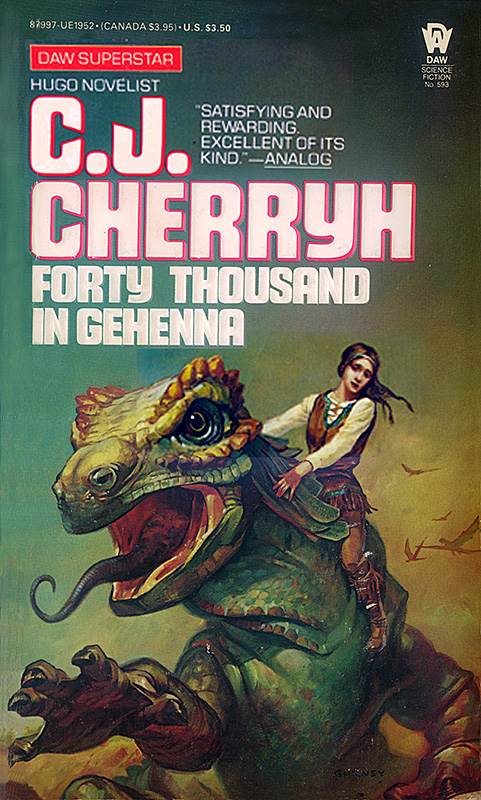 Found this at the annual C.H. Booth Library book
sale. It's a standalone in the Alliance-Union Universe of which Downbelow Station
is probably the most well-known. Having recently read The Pride of Chanur, I was curious
to read something else by C.J. Cherryh. Unfortunately, this one wasn't as enjoyable.
Found this at the annual C.H. Booth Library book
sale. It's a standalone in the Alliance-Union Universe of which Downbelow Station
is probably the most well-known. Having recently read The Pride of Chanur, I was curious
to read something else by C.J. Cherryh. Unfortunately, this one wasn't as enjoyable. Rosewater
is a town on the edge. A community formed around the edges of a mysterious alien biodome, its residents
comprise the hopeful, the hungry and the helpless—people eager for a glimpse inside the dome or
a taste of its rumored healing powers.
Rosewater
is a town on the edge. A community formed around the edges of a mysterious alien biodome, its residents
comprise the hopeful, the hungry and the helpless—people eager for a glimpse inside the dome or
a taste of its rumored healing powers.
 I
wasn't planning on reading this book. While I enjoyed the first few Van Halen albums—I
checked out after 1984—there are a lot more people further up on the fan
spectrum than me. But a friend of mine loaned it to me, thinking that I might enjoy
reading it (I'd loaned him Bruce Dickinson's What Does This Button Do?, so fair
exchange). And yes, to some extent, I did enjoy reading it.
I
wasn't planning on reading this book. While I enjoyed the first few Van Halen albums—I
checked out after 1984—there are a lot more people further up on the fan
spectrum than me. But a friend of mine loaned it to me, thinking that I might enjoy
reading it (I'd loaned him Bruce Dickinson's What Does This Button Do?, so fair
exchange). And yes, to some extent, I did enjoy reading it.
 This
is the fourth book in the series and it contains four stories.
This
is the fourth book in the series and it contains four stories.
 This
is another entry in the alien invasion genre, one of the longest running plots in science fiction.
War of the Worlds, probably the most well known work in this category, first appeared in
print in 1897 (the novel in 1898). Hollywood spawned too many alien invasion movies to count in the
1950s and 60s. After a bit of a break—disaster movies and sci-fi adventures dominated the
70s—the sub-genre diversified. Some aliens were just stopping by to say "Hi" (Close Encounters
of the Third Kind, E.T., Starman), while some were here to eat us (numerous horror movies).
Footfall stuck to the invasion part, but mixed things up a bit.
This
is another entry in the alien invasion genre, one of the longest running plots in science fiction.
War of the Worlds, probably the most well known work in this category, first appeared in
print in 1897 (the novel in 1898). Hollywood spawned too many alien invasion movies to count in the
1950s and 60s. After a bit of a break—disaster movies and sci-fi adventures dominated the
70s—the sub-genre diversified. Some aliens were just stopping by to say "Hi" (Close Encounters
of the Third Kind, E.T., Starman), while some were here to eat us (numerous horror movies).
Footfall stuck to the invasion part, but mixed things up a bit.
 When
Tully, a fugitive from a spaceship captured by the arrogant, thieving, rodent-like Kif, takes refuge on the
Pride of Chanur, a merchant vessel belonging to a clan of the lion-like Hani, Pyanfar Chanur, its captain, gives
him shelter, in spite of all the dangers she and her crew will face.
When
Tully, a fugitive from a spaceship captured by the arrogant, thieving, rodent-like Kif, takes refuge on the
Pride of Chanur, a merchant vessel belonging to a clan of the lion-like Hani, Pyanfar Chanur, its captain, gives
him shelter, in spite of all the dangers she and her crew will face.
 An
excellent finish.
An
excellent finish. Wow, that was something!
 The
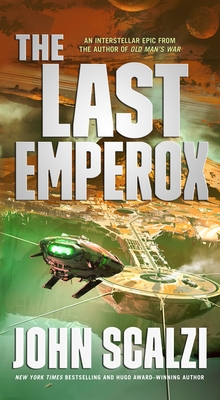
collapse of The Flow, the interstellar pathway between the planets of the Interdependency, has
accelerated. Entire star systems―and billions of people―are becoming cut off from the rest of
human civilization. This collapse was foretold through scientific prediction... and yet, even
as the evidence is obvious and insurmountable, many still try to rationalize, delay and profit
from, these final days of one of the greatest empires humanity has ever known.
The
collapse of The Flow, the interstellar pathway between the planets of the Interdependency, has
accelerated. Entire star systems―and billions of people―are becoming cut off from the rest of
human civilization. This collapse was foretold through scientific prediction... and yet, even
as the evidence is obvious and insurmountable, many still try to rationalize, delay and profit
from, these final days of one of the greatest empires humanity has ever known.
 This
is book one in the third and final trilogy of trilogies that compose this series.
This
is book one in the third and final trilogy of trilogies that compose this series.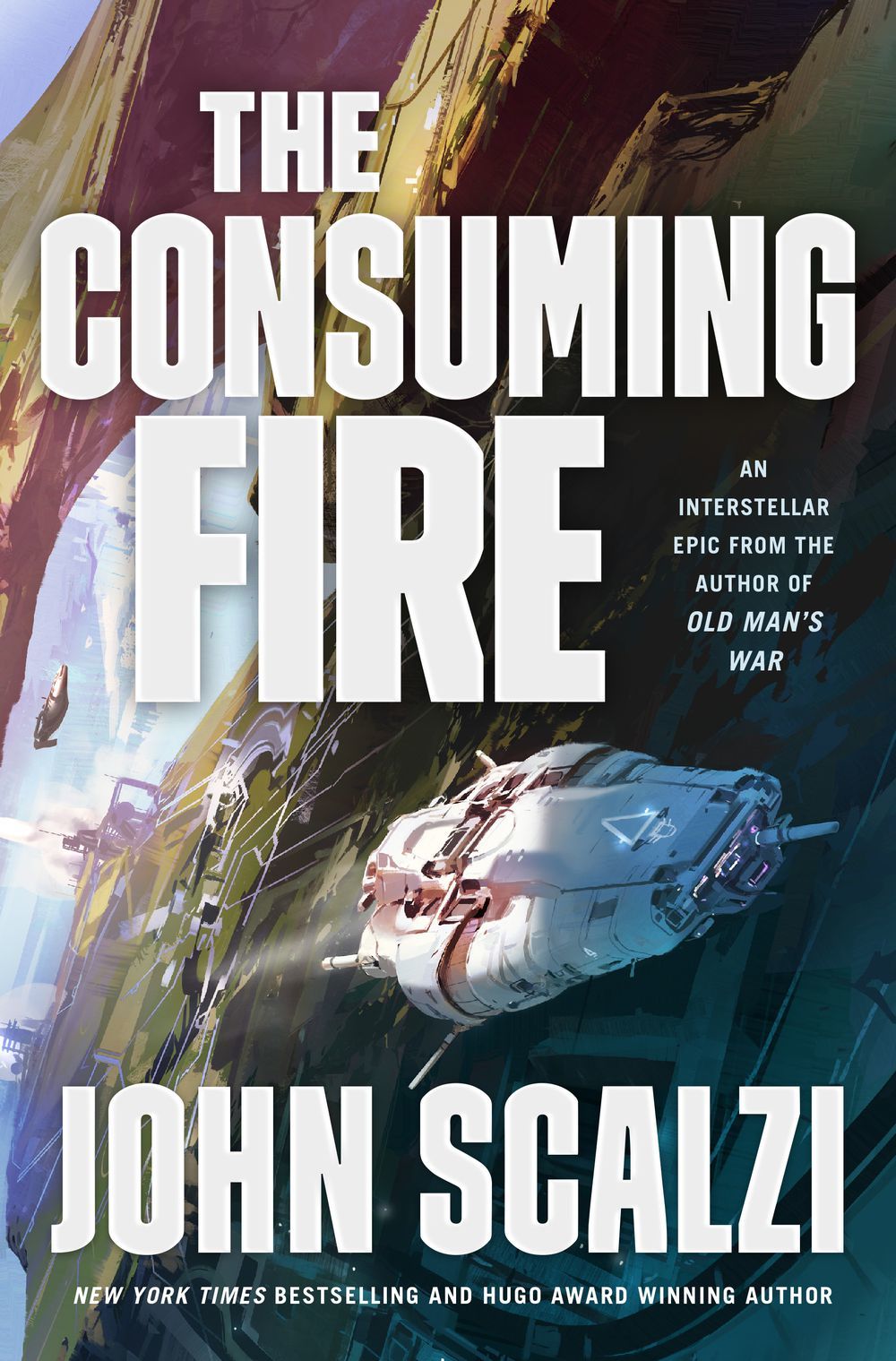 The
Interdependency—humanity's interstellar empire—is on the verge of collapse. The extra-dimensional
conduit that makes travel between the stars possible is disappearing, leaving entire systems and human
civilizations stranded.
The
Interdependency—humanity's interstellar empire—is on the verge of collapse. The extra-dimensional
conduit that makes travel between the stars possible is disappearing, leaving entire systems and human
civilizations stranded.