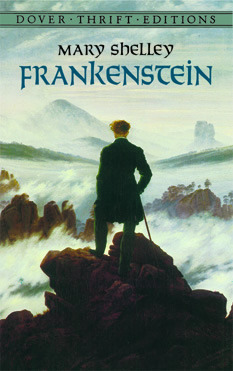
 At
once a Gothic thriller, a passionate romance, and a cautionary tale about the dangers of science,
Frankenstein tells the story of committed science student Victor Frankenstein. Obsessed with
discovering the cause of generation and life and bestowing animation upon lifeless matter,
Frankenstein assembles a human being from stolen body parts but; upon bringing it to life,
he recoils in horror at the creature's hideousness. Tormented by isolation and loneliness,
the once-innocent creature turns to evil and unleashes a campaign of murderous revenge
against his creator, Frankenstein.
At
once a Gothic thriller, a passionate romance, and a cautionary tale about the dangers of science,
Frankenstein tells the story of committed science student Victor Frankenstein. Obsessed with
discovering the cause of generation and life and bestowing animation upon lifeless matter,
Frankenstein assembles a human being from stolen body parts but; upon bringing it to life,
he recoils in horror at the creature's hideousness. Tormented by isolation and loneliness,
the once-innocent creature turns to evil and unleashes a campaign of murderous revenge
against his creator, Frankenstein.
Even if one hasn't read the book or seen any of the numerous film adaptations, it would be difficult to believe that anyone in Western Civilization had not at least heard about Frankenstein in some fashion. It is a classic tale already two centuries old that will live on for centuries to come.
If you haven't read the book, it bears little resemblance to the majority of films that were inspired by it. Most films devote significant screen time to portraying how the monster was created and how Frankenstein is thrilled with his creation. Frankenstein tries to educate it, make it more human, but the process is frustratingly difficult. Said creation then runs amok, much to Frankenstein's chagrin. The films are typically a warning about the dangers of science run amok.
But the book spends scant time on the monster's creation. We're given Frankenstein's motivations for reanimating the dead (grief over his mother's death) and his research into the matter—primarily reading ancient, discredited tomes—but no mention of where he got body parts or what process provided that spark to reanimate the flesh. It's just handwaved onward, not important. And then when the monster is created, Frankenstein rejects it outright. It is so hideous an abomination that he can't stand to be in the same room with it and drives it away.
Shelley attacks the canard that beauty is good and ugliness is evil. The monster is attacked by all who gaze upon it for no reason other than it is so hideous it must be evil. The monster secretly provides firewood and game for a poor family of seemingly kind people, but they attack it on sight. Later, after the monster learns how to speak (No, not "Fire bad!"), it engages with Frankenstein in debate, slinging purple prose in his face, lamenting how lonely it is because of its wretched existence. But Frankenstein can't get past the ugly and rejects the monster again and again.
Naturally, all of this rejection is too much for the monster. It resorts to committing evil deeds which only incense Frankenstein's animosity towards the monster. Ultimately, the monster feels that negative attention is better than no attention and torments its creator further.
Sure, Frankenstein blames himself for creating the monster. He hides this fact from people for years, all the while crying out to the stars about his woe and misery and longing to be with his love and his wonderful family. But ultimately, he never accepts the blame for his true crime: rejecting his creation upon its birth. Think of it this way: If a parent rejects his/her child all of that child's life, never shows that child love, what sort of person will that child grow up to be? The rest of us would think that parent was a lousy human being. Frankenstein is no different. But instead, Captain Walton, who meets Frankenstein while he's out in pursuit of the monster, showers such slavish admiration upon the man that I swear he was smitten by him, regardless of what Frankenstein told him that he'd done.
Frankenstein is the true monster here, not his hideous creation. I'll take the Hollywood version of Dr. Frankenstein. At least his twisted heart was in the right place.
3 stars
By the way, Young Frankenstein was the best of them all.
\_/
DED

 When
the body of Harry Injurides - playwright, provocateur and bodybuilder - washes up on a beach, his
friends are shocked, but not altogether surprised. But when they meet to mourn Harry, he shows up
and says he's been resurrected.
When
the body of Harry Injurides - playwright, provocateur and bodybuilder - washes up on a beach, his
friends are shocked, but not altogether surprised. But when they meet to mourn Harry, he shows up
and says he's been resurrected.
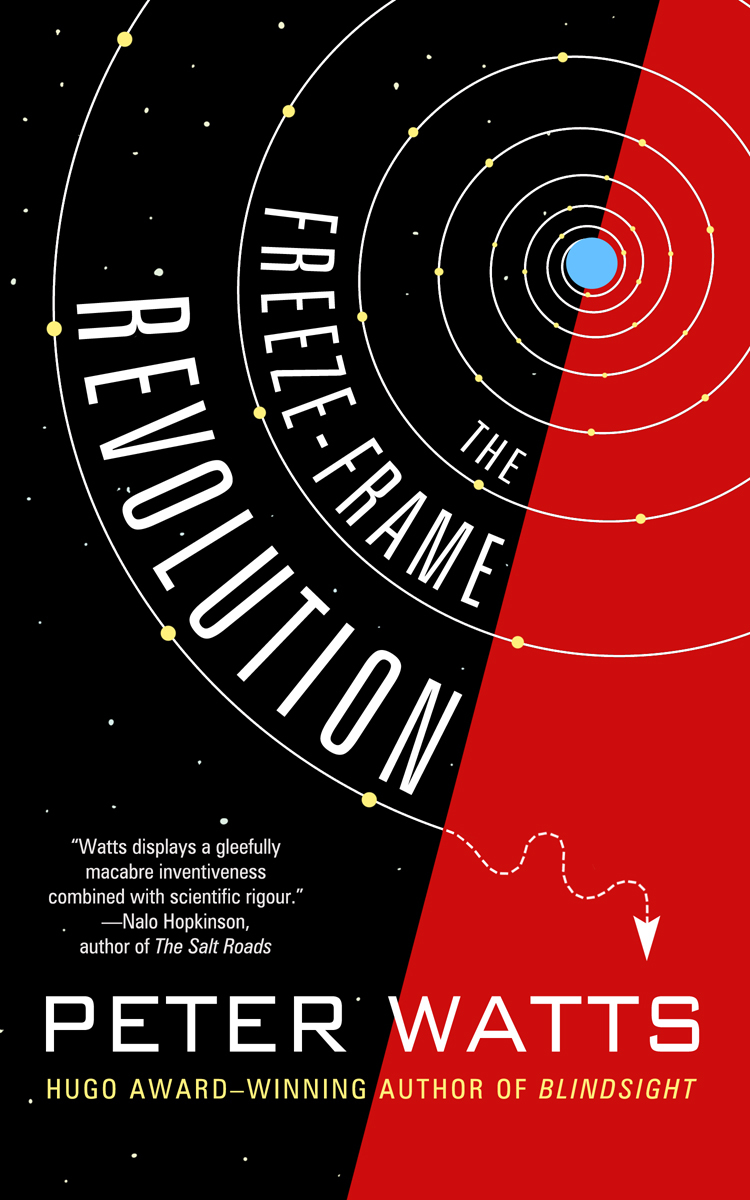 How
do you stage a mutiny when you're only awake one day in a million? How do you conspire when your tiny handful of
potential allies changes with each job shift? How do you engage an enemy that never sleeps, that sees through
your eyes and hears through your ears, and relentlessly, honestly, only wants what's best for you? Trapped
aboard the starship Eriophora, Sunday Ahzmundin is about to discover the components of any
successful revolution: conspiracy, code—and unavoidable casualties.
How
do you stage a mutiny when you're only awake one day in a million? How do you conspire when your tiny handful of
potential allies changes with each job shift? How do you engage an enemy that never sleeps, that sees through
your eyes and hears through your ears, and relentlessly, honestly, only wants what's best for you? Trapped
aboard the starship Eriophora, Sunday Ahzmundin is about to discover the components of any
successful revolution: conspiracy, code—and unavoidable casualties.
 Five
years ago, the Rebel Alliance destroyed the Death Star, defeated Darth Vader and the Emperor, and drove the
remnants of the old Imperial Starfleet to a distant corner of the galaxy. Princess Leia and Han Solo are
married and expecting twins. And Luke Skywalker has become the first in a long-awaited line of Jedi Knights.
Five
years ago, the Rebel Alliance destroyed the Death Star, defeated Darth Vader and the Emperor, and drove the
remnants of the old Imperial Starfleet to a distant corner of the galaxy. Princess Leia and Han Solo are
married and expecting twins. And Luke Skywalker has become the first in a long-awaited line of Jedi Knights.
 Johnny
Truant gets a call in the middle of the night from his friend Lude. Apparently, this weird old guy
(Zampanò) died in his apartment building, and the landlord left the door unlocked for Goodwill
to come and clean the place out the next morning. Johnny heads over and the two of them find this
manuscript in a trunk. The manuscript is an analysis of a documentary, The Navidson Record.
Skimming through it, Johnny notices that it is annotated with footnotes referencing other people who
have either analyzed the film or interviewed the people who took part in it. The film concerns a
house that is larger on the inside than the outside. Curious, Johnny takes it home with him.
Johnny
Truant gets a call in the middle of the night from his friend Lude. Apparently, this weird old guy
(Zampanò) died in his apartment building, and the landlord left the door unlocked for Goodwill
to come and clean the place out the next morning. Johnny heads over and the two of them find this
manuscript in a trunk. The manuscript is an analysis of a documentary, The Navidson Record.
Skimming through it, Johnny notices that it is annotated with footnotes referencing other people who
have either analyzed the film or interviewed the people who took part in it. The film concerns a
house that is larger on the inside than the outside. Curious, Johnny takes it home with him.
 Six
months have passed since the events of The Silver Mask. Over the winter months, Vasini was plagued by
Gareth Miller, the Winter Fayre Killer, who murdered 17 people before he was captured by Lieutenant David
Locke. The city now waits for Miller to be hanged. But when Miller escapes gaol, ready to terrorise
Vasini's streets once more, Locke must hunt the murderer again to stop him from claiming more lives.
Six
months have passed since the events of The Silver Mask. Over the winter months, Vasini was plagued by
Gareth Miller, the Winter Fayre Killer, who murdered 17 people before he was captured by Lieutenant David
Locke. The city now waits for Miller to be hanged. But when Miller escapes gaol, ready to terrorise
Vasini's streets once more, Locke must hunt the murderer again to stop him from claiming more lives.
 I
stumbled across
I
stumbled across