 This
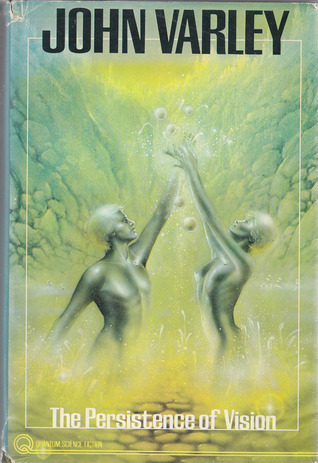
is a collection of short stories John Varley wrote in the 70s. Most of them take place in the same universe—the
Eight Worlds universe—as his novel, The Ophiuchi Hotline. So those stories make use of memory
recordings, cloning, commonplace sex changes, nullfields, AI, and humanity's exile from Earth.
This
is a collection of short stories John Varley wrote in the 70s. Most of them take place in the same universe—the
Eight Worlds universe—as his novel, The Ophiuchi Hotline. So those stories make use of memory
recordings, cloning, commonplace sex changes, nullfields, AI, and humanity's exile from Earth.
Stories that aren't part of Eight Worlds universe are marked with an *.
"The Phantom of Kansas" - A woman who composes meteorological symphonies can't recall how she crafted her most successful work because she keeps getting murdered. Told not as horror or thriller, but more as a puzzle to be solved. Begs the question: Is sex with your clone considered masturbation?
"Air Raid" * - Someone hijacked the plane! Terrorists? Nope, time travelers. This story became the kernel for what would become Varley's novel, Millennium.
"Retrograde Summer" - While swimming on mercury on Mercury, a young man learns about his family's past. It was ok. I didn't care for the details revealed about families in the Eight Worlds series. While I'm not privy to the details of Varley's divorce from his wife, I suspect that this story might've been his way of processing it.
"The Black Hole Passes" - Unrequited love between a self-absorbed, lonely, whiny guy and a tech-savvy woman that goes on for too long. Not sure why she bothers with him. I guess she's bored listening in on the signals coming from 70 Ophiuchi. And then the black hole comes along to make the story interesting.
"In the Hall of the Martian Kings" * - A group of astronauts are marooned on Mars. The outcome is very different from The Martian. One of two stories in this collection where Varley explores what sort of society arises when free of the constraints imposed by our contemporary civilization.
"In the Bowl" - Rock hunting on Venus. Would've been better—believable—if the character of Ember was, say, five to ten years older. I have a difficult time believing that an eleven-year-old can have the necessary acumen to be a doctor.
"Gotta Sing, Gotta Dance" - Symbs—human - plant symbiotes that like to float around in space around Saturn—apparently make the best music composers, but need the help of a music producer to get the songs out of their heads. Maybe sex will help.
"Overdrawn at the Memory Bank" - A child's prank leads to protagonist's mind getting trapped inside a computer. Apart from that, it bears no resemblance to the PBS TV movie version that starred Raul Julia.
"The Persistence of Vision" * - In a collapsing America, a drifter wanders into a commune for the deaf-blind. At times, it takes on the tone of an anthropologist who, as he learns more about the society, wants to become accepted as one of the tribe.
There are three stories in this collection where I wish Varley had aged his female characters five to ten years. I don't get Varley's Lolita-esque flirtations with his characters. I know the sexual revolution hit sci-fi authors hard in the 70s, but this seems creepy at best.
The best stories in the bunch are the ones that don't take place in the Eight Worlds universe: "Air Raid," "In the Hall of the Martian Kings," and "The Persistence of Vision." Each of these stories demonstrate how well Varley can craft an interesting story, build a world on a limited word count budget, and solid characters. The Eight Worlds stories all annoyed me in some fashion, leaving me to shake my head. And I couldn't help but put my editor's hat on and note how each story could be better.
Recommended for Varley completists or those with a Jared Diamond level of cultural objectivity.
2.5 stars.
\_/
DED

 If you
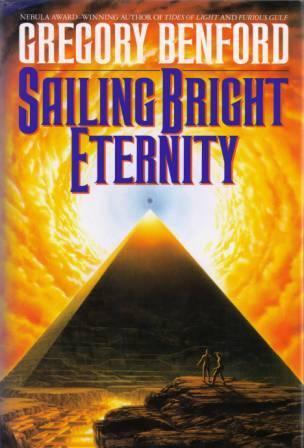
made it this far into the series, congratulations. Whether or not you'll like how it ends is a bit of a coin toss.
If you
made it this far into the series, congratulations. Whether or not you'll like how it ends is a bit of a coin toss.
 West
Germany, 1949. Former actor Max Kaspar suffered greatly in the Second World War. Now he owns a nightclub in
Munich—and occasionally lends a hand to the newly formed CIA. Meanwhile, his brother Harry has ventured
beyond the Iron Curtain to rescue an American scientist. When Harry is also taken captive, Max resolves to
locate his brother at all costs. The last thing he expects is for Harry to go rogue.
West
Germany, 1949. Former actor Max Kaspar suffered greatly in the Second World War. Now he owns a nightclub in
Munich—and occasionally lends a hand to the newly formed CIA. Meanwhile, his brother Harry has ventured
beyond the Iron Curtain to rescue an American scientist. When Harry is also taken captive, Max resolves to
locate his brother at all costs. The last thing he expects is for Harry to go rogue.
 Trying
to escape the relentless mechs, the last humans from the planet Snowglade take their ancient starship on a
dangerous course straight into the Eater, the black hole at the galactic center. Hungry and desperate,
the refugees begin to question the leadership of Captain Killeen, who believes the center holds their
one hope of survival. Meanwhile, Killeen's son Toby struggles with the microchips that were implanted
in his spine—a technology that now threatens his sanity. Caught between their genocidal
pursuers and peril in the galactic center, Killeen and Toby bring humanity to its final destiny.
Trying
to escape the relentless mechs, the last humans from the planet Snowglade take their ancient starship on a
dangerous course straight into the Eater, the black hole at the galactic center. Hungry and desperate,
the refugees begin to question the leadership of Captain Killeen, who believes the center holds their
one hope of survival. Meanwhile, Killeen's son Toby struggles with the microchips that were implanted
in his spine—a technology that now threatens his sanity. Caught between their genocidal
pursuers and peril in the galactic center, Killeen and Toby bring humanity to its final destiny.
 Galactic
Center series book #4.
Galactic
Center series book #4. This
one starts out well, is muddled in the middle, and then ends a bit disappointingly.
This
one starts out well, is muddled in the middle, and then ends a bit disappointingly.
 After
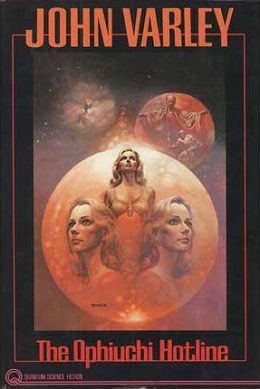
supremely advanced aliens invade Earth to liberate the planet's intelligent species—whales and dolphins—the
majority of humankind is exiled into space, where, by means of bioengineering, they begin to adapt to and thrive in
their unforgiving environments. Cutting-edge tech means that they can modify body parts, regularly store their
memories for cloning purposes and even merge with seemingly benevolent alien beings (known as symbs) to create
another entity altogether. The discovery of a steady—and mostly indecipherable—stream of data
originating from a star system 17 light-years away offers some kind of hope of advancing the species and
retaking the homeworld. But when the novel's protagonist (a series of successive clones named Lilo) travels
out to 70 Ophiuchi, what she finds may not be salvation for the human species but its damnation.
After
supremely advanced aliens invade Earth to liberate the planet's intelligent species—whales and dolphins—the
majority of humankind is exiled into space, where, by means of bioengineering, they begin to adapt to and thrive in
their unforgiving environments. Cutting-edge tech means that they can modify body parts, regularly store their
memories for cloning purposes and even merge with seemingly benevolent alien beings (known as symbs) to create
another entity altogether. The discovery of a steady—and mostly indecipherable—stream of data
originating from a star system 17 light-years away offers some kind of hope of advancing the species and
retaking the homeworld. But when the novel's protagonist (a series of successive clones named Lilo) travels
out to 70 Ophiuchi, what she finds may not be salvation for the human species but its damnation.