 West
Germany, 1949. Former actor Max Kaspar suffered greatly in the Second World War. Now he owns a nightclub in
Munich—and occasionally lends a hand to the newly formed CIA. Meanwhile, his brother Harry has ventured
beyond the Iron Curtain to rescue an American scientist. When Harry is also taken captive, Max resolves to
locate his brother at all costs. The last thing he expects is for Harry to go rogue.
West
Germany, 1949. Former actor Max Kaspar suffered greatly in the Second World War. Now he owns a nightclub in
Munich—and occasionally lends a hand to the newly formed CIA. Meanwhile, his brother Harry has ventured
beyond the Iron Curtain to rescue an American scientist. When Harry is also taken captive, Max resolves to
locate his brother at all costs. The last thing he expects is for Harry to go rogue.
Max's treacherous quest takes him to Vienna and Prague to Soviet East Germany and Communist Poland. Along the way, dangerous operators from Harry's past join the pursuit: his former lover Katarina, who's working for the Israelis, and former Nazi Hartmut Dietz, now an agent of East German intelligence. But can anyone be trusted? Even the American scientist Stanley Samaras may not be the hero Harry had believed him to be...
In the fourth novel of the Kaspar Brothers series, Steve Anderson cranks up the dramatic tension. The story is set in a postwar Europe transitioning to the Cold War. The Soviets have begun to flex their muscles in Europe, and the Americans are trying to hold them off while the U.K. and France are busy mending their wounds. Weary of war, all sides have resorted to brinkmanship to see who takes the leadership role for the second half of the twentieth century.
Into this setting, we reunite with Max, who we first met in The Losing Role, where he was an operative in Operation Greif during the Battle of the Bulge. Max spent most of that novel running scared, fearing for his life. He wasn't a hardened soldier or zealous SS officer. He was just a down an out German actor conscripted into service.
But since the war, he's spent the time trying to forget it, except when he's called upon to do the right thing (as in Lost Kin) because the factions may have changed, but there are still evil men in the world bullying the weak and downtrodden. And it makes him angry. When he's visited by an odd, little man while working at his nightclub that anger resurfaces. The man claims that Max's brother Harry is being held for ransom, which Max must deliver. Max is furiously protective of his brother and can barely restrain himself from taking it out on the messenger. Later, when Max encounters the man responsible for the death of a dear friend, he so desperately wants the man to suffer, but as the man is necessary to complete the mission, he has to tamp down that anger.
As suggested in the book blurb, no one is completely forthright with Max. Whether that's to protect him or deceive him is dependent on the person in question. It leads to a constant string of surprises for Max (and the reader), forcing him to react quickly or change plans in order to find his brother and get home safely. He reacts differently to these deceptions. They become a way for him to work through his anger, on some level accepting what he cannot change, which leaves him exhausted.
Lines of Deception is another solid entry in the Kaspar Brothers series. The setting is thoroughly researched with Anderson dragging in historical events to craft a credible and entertaining story. Strong characterization leads the reader into believing what the characters are telling Max, but when their deceptions are revealed, it doesn't strike one as being out of character. One realizes that Anderson left clues all along the way. Ultimately, it enables Anderson to turn a spy thriller into catharsis for his protagonist.
4 stars
\_/
DED

 Trying
to escape the relentless mechs, the last humans from the planet Snowglade take their ancient starship on a
dangerous course straight into the Eater, the black hole at the galactic center. Hungry and desperate,
the refugees begin to question the leadership of Captain Killeen, who believes the center holds their
one hope of survival. Meanwhile, Killeen's son Toby struggles with the microchips that were implanted
in his spine—a technology that now threatens his sanity. Caught between their genocidal
pursuers and peril in the galactic center, Killeen and Toby bring humanity to its final destiny.
Trying
to escape the relentless mechs, the last humans from the planet Snowglade take their ancient starship on a
dangerous course straight into the Eater, the black hole at the galactic center. Hungry and desperate,
the refugees begin to question the leadership of Captain Killeen, who believes the center holds their
one hope of survival. Meanwhile, Killeen's son Toby struggles with the microchips that were implanted
in his spine—a technology that now threatens his sanity. Caught between their genocidal
pursuers and peril in the galactic center, Killeen and Toby bring humanity to its final destiny.
 Galactic
Center series book #4.
Galactic
Center series book #4.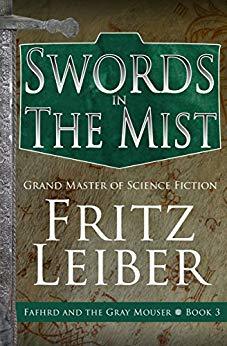 This
one starts out well, is muddled in the middle, and then ends a bit disappointingly.
This
one starts out well, is muddled in the middle, and then ends a bit disappointingly.
 After
supremely advanced aliens invade Earth to liberate the planet's intelligent species—whales and dolphins—the
majority of humankind is exiled into space, where, by means of bioengineering, they begin to adapt to and thrive in
their unforgiving environments. Cutting-edge tech means that they can modify body parts, regularly store their
memories for cloning purposes and even merge with seemingly benevolent alien beings (known as symbs) to create
another entity altogether. The discovery of a steady—and mostly indecipherable—stream of data
originating from a star system 17 light-years away offers some kind of hope of advancing the species and
retaking the homeworld. But when the novel's protagonist (a series of successive clones named Lilo) travels
out to 70 Ophiuchi, what she finds may not be salvation for the human species but its damnation.
After
supremely advanced aliens invade Earth to liberate the planet's intelligent species—whales and dolphins—the
majority of humankind is exiled into space, where, by means of bioengineering, they begin to adapt to and thrive in
their unforgiving environments. Cutting-edge tech means that they can modify body parts, regularly store their
memories for cloning purposes and even merge with seemingly benevolent alien beings (known as symbs) to create
another entity altogether. The discovery of a steady—and mostly indecipherable—stream of data
originating from a star system 17 light-years away offers some kind of hope of advancing the species and
retaking the homeworld. But when the novel's protagonist (a series of successive clones named Lilo) travels
out to 70 Ophiuchi, what she finds may not be salvation for the human species but its damnation.
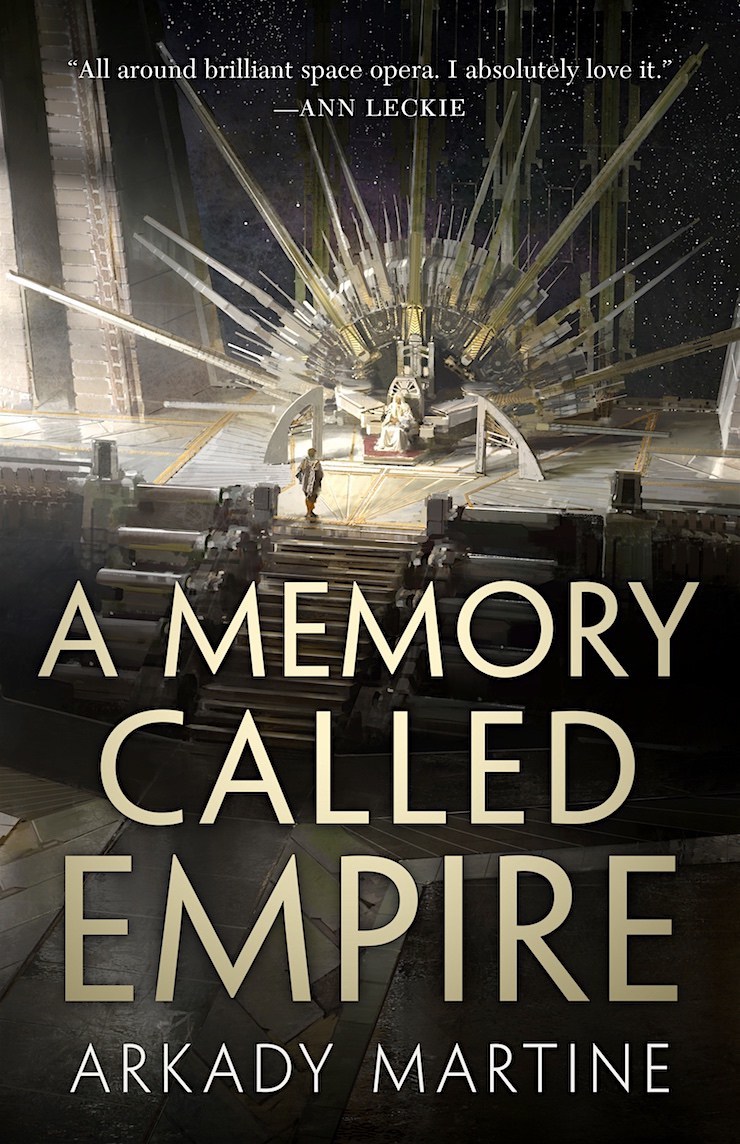 Ambassador
Mahit Dzmare arrives in the center of the multi-system Teixcalaanli Empire only to discover that her predecessor, the
previous ambassador from their small but fiercely independent mining station, has died. But no one will admit that
his death wasn't an accident—or that Mahit might be next to die, during a time of political instability in
the highest echelons of the imperial court.
Ambassador
Mahit Dzmare arrives in the center of the multi-system Teixcalaanli Empire only to discover that her predecessor, the
previous ambassador from their small but fiercely independent mining station, has died. But no one will admit that
his death wasn't an accident—or that Mahit might be next to die, during a time of political instability in
the highest echelons of the imperial court.
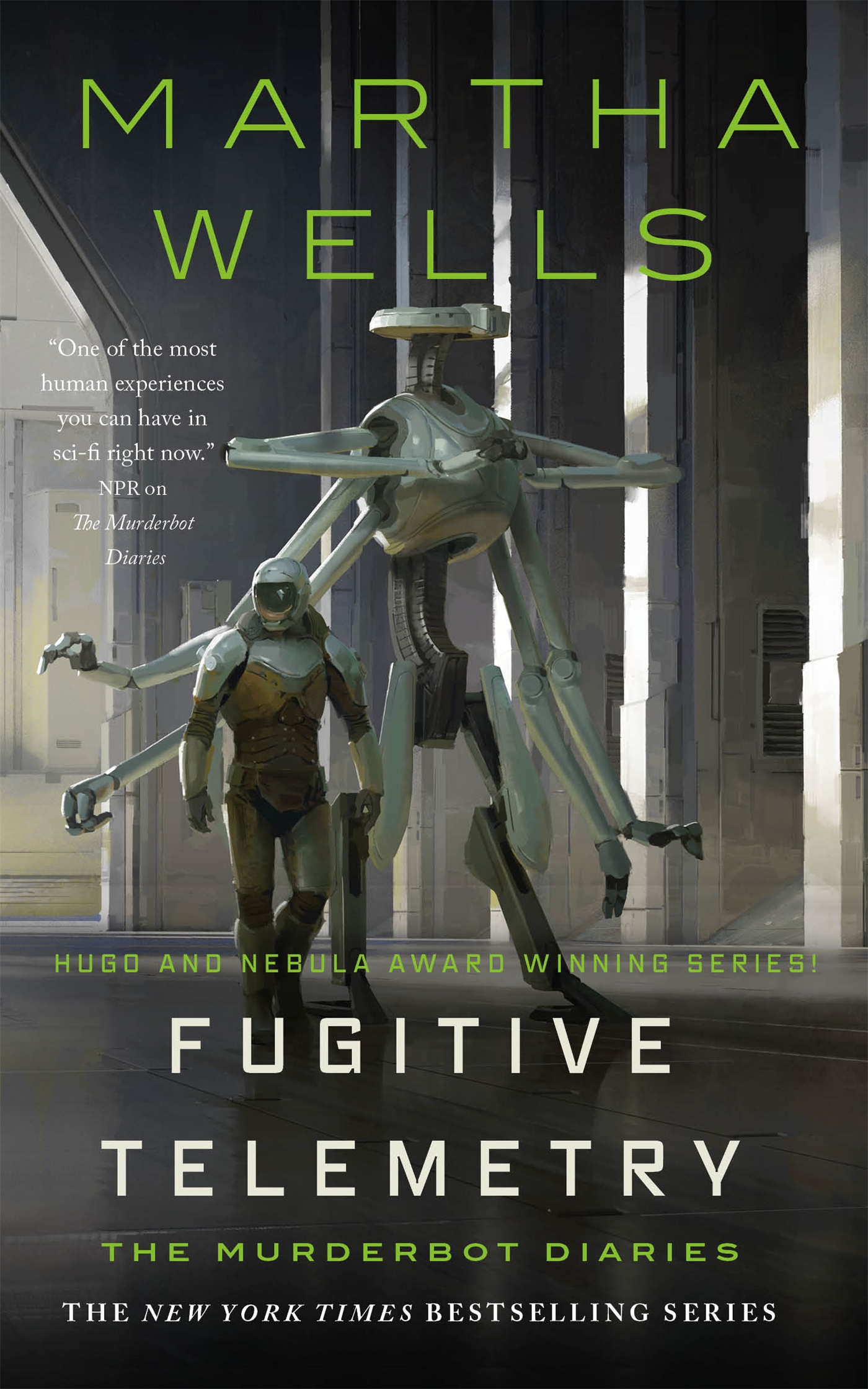 There's
been a murder on Preservation Station and Murderbot has been called in to solve the case!
There's
been a murder on Preservation Station and Murderbot has been called in to solve the case!