 Physicist Dennis Nuel is the first human to probe the strange realms called anomaly worlds: alternate universes where the laws of science are unpredictably changed. But the world Dennis discovers seems almost like our own—with one perplexing difference. To his astonishment, he’s hailed as a wizard, meets a beautiful woman with strange powers, and finds himself fighting a mysterious warlord as he struggles to solve the riddle of this baffling world.
While this novel is couched as sci-fi, it reads like fantasy. Sure, the beginning of the novel takes place in a near future Earth, and there's the zievatron thingee that allows Nuel to travel to another world, but it ends there. The rest of the novel is spent in a medieval world, and Nuel must put his wits to use inventing things to gain favor and the upper hand in his struggles with the denizens of this world. There's a princess who needs rescuing, castles and dungeons, and superstitious peasants.
So what is "the practice effect?" Well, you know how you have to practice playing the clarinet to learn a song or get on the ice and skate to improve your hockey skills (maybe not the best examples, but you should get my point)? On this world, that's how you make objects better. The more you use them as they're intended, the better they get. Got a pair of ripped jeans? Wear them a lot and let them practice being jeans and those rips will go away. Got a crude stone axe? Go chop some wood with it, and it'll slowly sharpen on its own accord.
If you remember physics class, you'll know which law has been turned on its head to make worn out things magically like new. Just another element to bolster the case for this being a fantasy novel.
90+% of the story is told from Nuel's POV. Fortunately that 10% exists as it affords the reader a chance to learn that the villainous Baron and Princess Linnora aren't two-dimensional stock characters. The Baron is greedy and lusts for power, but he does have a few principles. It was especially nice to see that, while the princess was in need of rescuing, she carried her own weight as the novel wore on.
None of this is said to infer that this is a bad book. It's definitely not. I enjoyed it. The pacing is good, and the story is entertaining. The characters are fine, though they could've used a little more depth. They're likable, you still root for them to succeed. The story could've devolved into one of those stereotypical square-jawed male heroic fantasy tropes that were so popular decades ago, but it didn't. Not Brin's best work, but still fun.
3 stars
\_/
DED

 2.5 stars.
 As the Empire reels from its critical defeats at the Battle of Endor, the Rebel Alliance—now a fledgling New Republic—presses its advantage by hunting down the enemy’s scattered forces before they can regroup and retaliate. But above the remote planet Akiva, an ominous show of the enemy’s strength is unfolding. Out on a lone reconnaissance mission, pilot Wedge Antilles watches Imperial Star Destroyers gather like birds of prey circling for a kill, but he’s taken captive before he can report back to the New Republic leaders.
 Every winter for the last several years, I've made it my resolve to take advantage of being cooped up indoors and write. If you've paid any attention to me whatsoever, you know that I haven't been successful at all at seeing that resolution come to fruition. Sometimes the reasons are good: I have a freelance job editing or coding and I'm actually earning money. Sometimes the reasons aren't so good.
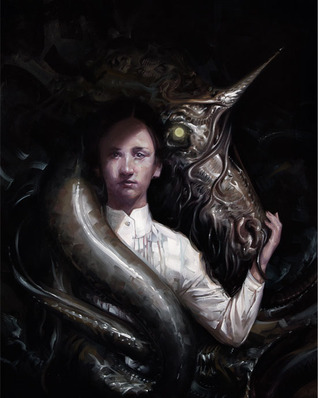 If this story had come out ten years earlier, I would never have let my daughter play with those MyLittlePony™ things. But she grew to love giraffes instead of horses or unicorns, so I suppose that worry would've been for naught anyway. At least until Stross pens something horrific about those ungainly ungulates.
 We are not alone.
 After years of self-imposed exile from a civilization rife with degradation and indecency, cynical journalist Spider Jerusalem is forced to return to a job that he hates and a city that he loathes. Working as an investigative reporter for the newspaper The Word, Spider attacks the injustices of his surreal 23rd Century surroundings. Combining black humor, life-threatening situations, and moral ambiguity, this book is the first look into the mind of an outlaw journalist and the world he seeks to destroy.