 2.5 stars.
Clement's world building is the highlight of this sci-fi classic from 1954. Mesklin is a large, disc-shaped world that spins so fast that days are only 18 minutes long. Gravity runs from 3 G at the equator to 700 G at the poles. It is a world of liquid methane seas and ammonia snow. The humans have special environmental suits to protect them from the hostile atmosphere and tanks to get around, provided they stay close to the equator. And yet there's sentient life: 15 inch-long centipede-like beings who are in the early stages of civilization.
And that's the high point of this book.
Characterization is flat. Even the aliens show very little depth, behaving very much like their human counterparts. Interactions between Barlennan, the local Meskinite captain, and Lackland, his human contact, are rather easy. Lackland taught Barlennan English (before the story begins) and except for the occasional idiom or scientific concept, there is little lost in translation. The most interesting part is that the humans and Barlennan's trade group work together to solve problems rather than trying to kill one another.
Science fiction doesn't really age well. Unforeseen technological advances (Computers!) and cultural progression trip up most stories. While the technological hiccups here are few and easy enough to skip over (slide rule, film projector reel), and there isn't any cultural baggage, the writing style is stuck in the time period from when it was written. It's stale. Conversations are all business. The prose is stark, all too objective. It's the Asteroids video game equivalent of literature, with far fewer explosions.
The story is a very linear progression from one encounter to another as the Mesklinites journey from the equator, where they encountered to the south pole of their world to retrieve very expensive equipment from an incapacitated human rocket. It's as much a mission of exploration for the north pole dwelling Barlennan as it is for the visiting humans (though they're keeping an eye on the action via a radio). Unfortunately, we drown in minutiae, both travelogue and mathematical. At times, it seems as if Clement has written this story for boys yearning for careers in science. "Look lads, you can have all sorts of adventures if you study hard!"
It isn't bad, but it isn't terribly exciting either.
\_/
DED

 As the Empire reels from its critical defeats at the Battle of Endor, the Rebel Alliance—now a fledgling New Republic—presses its advantage by hunting down the enemy’s scattered forces before they can regroup and retaliate. But above the remote planet Akiva, an ominous show of the enemy’s strength is unfolding. Out on a lone reconnaissance mission, pilot Wedge Antilles watches Imperial Star Destroyers gather like birds of prey circling for a kill, but he’s taken captive before he can report back to the New Republic leaders.
 Every winter for the last several years, I've made it my resolve to take advantage of being cooped up indoors and write. If you've paid any attention to me whatsoever, you know that I haven't been successful at all at seeing that resolution come to fruition. Sometimes the reasons are good: I have a freelance job editing or coding and I'm actually earning money. Sometimes the reasons aren't so good.
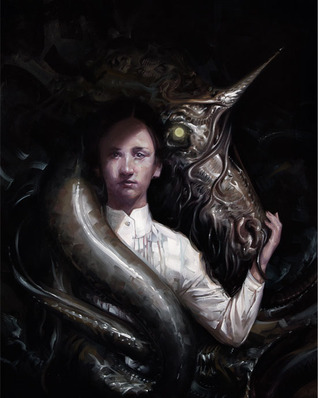 If this story had come out ten years earlier, I would never have let my daughter play with those MyLittlePony™ things. But she grew to love giraffes instead of horses or unicorns, so I suppose that worry would've been for naught anyway. At least until Stross pens something horrific about those ungainly ungulates.
 We are not alone.
 After years of self-imposed exile from a civilization rife with degradation and indecency, cynical journalist Spider Jerusalem is forced to return to a job that he hates and a city that he loathes. Working as an investigative reporter for the newspaper The Word, Spider attacks the injustices of his surreal 23rd Century surroundings. Combining black humor, life-threatening situations, and moral ambiguity, this book is the first look into the mind of an outlaw journalist and the world he seeks to destroy.
 For twelve thousand years the Galactic Empire has ruled supreme. Now it is dying. But only Hari Seldon, creator of the revolutionary science of psychohistory, can see into the future—to a dark age of ignorance, barbarism, and warfare that will last thirty thousand years. To preserve knowledge and save mankind, Seldon gathers the best minds in the Empire—both scientists and scholars—and brings them to a bleak planet at the edge of the Galaxy to serve as a beacon of hope for a future generations. He calls his sanctuary the Foundation.